LPG Price Shock: When the Market Decides What Kitchens Can Afford
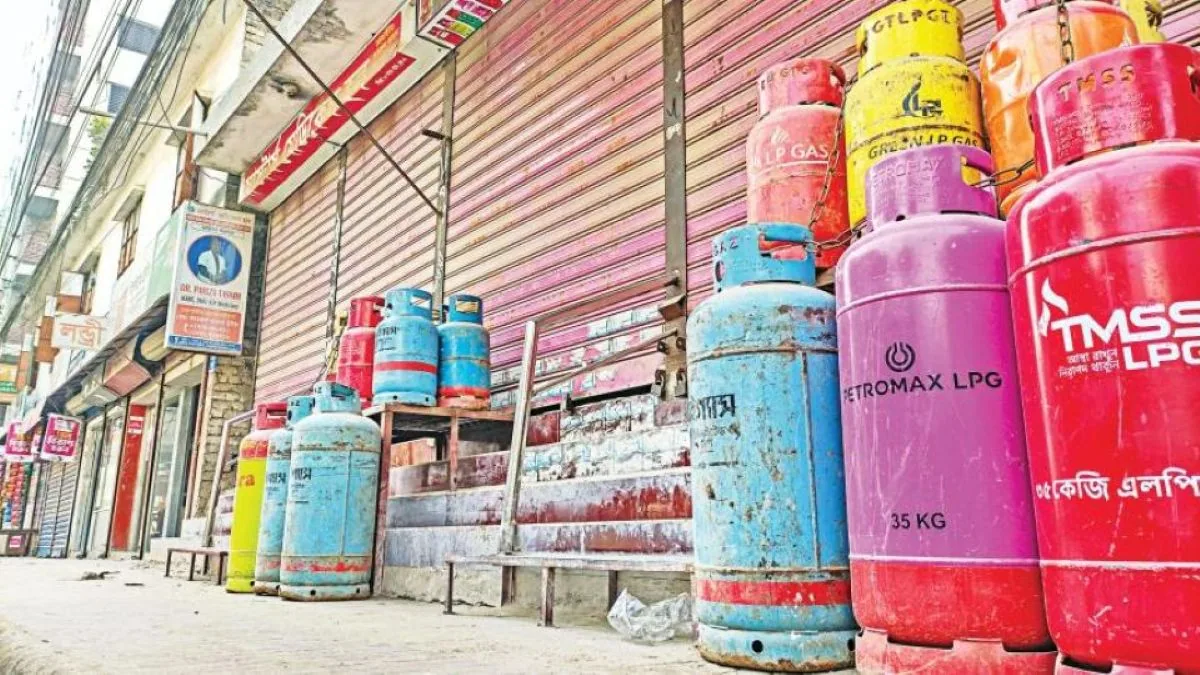
At a time when Bangladesh is deep in a gas crisis, liquefied petroleum gas was supposed to be the safety net. Instead, it has become a shock to household budgets.
On April 2, a 12-kg LPG cylinder cost Tk 1,728. By April 19, the same cylinder was Tk 1,940. That is a Tk 599 increase in 18 days. For the 80% of LPG users who rely on it to cook daily meals, this is not market volatility. This is policy failure.
The crisis behind the crisis
Our natural gas reserves are limited. Domestic production keeps falling despite new drilling efforts. LNG imports are up, but weak pipelines and port capacity mean we cannot deliver what we buy. In that gap, LPG should work as a bridge fuel. It is cost-effective, cleaner than firewood, and easier to transport. Industrial use has grown for those exact reasons.
But only 12% of total LPG goes to industry and commerce. Households carry 80% of the load, and now they carry all of the price shock too.
On Sunday, the Bangladesh Energy Regulatory Commission announced the latest hike: Tk 212 more per 12-kg cylinder, effective from 6:00 pm the same day. BERC cited war risk in the Middle East, higher insurance costs, and trader premiums rising to $250 per metric tonne as shipments avoid the Strait of Hormuz. Earlier this month, prices had already jumped Tk 387 on April 2. Before that, there was another Tk 32.30 per kg increase. The new retail rate stands at Tk 161.66 per kg.
BERC says LPG “must not be sold above the set price at any stage.” On the ground, supply is tight. Fuel oil rationing is back at pumps. Dhaka’s refuelling queues show how thin the buffer is.
Tk 599 in 18 days is not normal
Global propane and butane prices matter. Shipping detours matter. But when retail prices move this fast, three things have clearly failed.
First, there is no buffer. Unlike diesel or LNG, LPG has no strategic reserve. The sector grew without subsidy. Operators pay a Tk 1 crore annual licence fee, face registration delays, and still lack common pipelines for bulk supply. We outsourced an essential service to the private sector and gave it no infrastructure.
Second, there are no brakes. BERC sets prices but struggles to enforce them. Complaints against operators pile up, yet investigations are slow and public accountability is weak. Announcing a new rate at 6 pm does not guarantee a fair market at 8 am.
Third, there is no safety net. Energy experts recorded 580 LPG-related accidents in 2025. When prices spike, unsafe refilling and storage rise too. Households cut corners. Illegal shops multiply. The poor pay twice: once at the retailer, again at the hospital.
LPG can work, but only with rules
Demand is set to rise 60% in the next five years. Piped gas will not reach every home. Factories need steady energy as grid supply falters. LPG can fill the gap. But potential is not policy.
If the government wants LPG as a real alternative, it must treat it like critical infrastructure. Four steps are urgent.
1. Price transparency. Publish the full Saudi CP to retail cost breakdown every month. If war premiums are $250 per metric tonne, show the math. People deserve to know why their stove costs Tk 212 more overnight.
2. Fix the bottlenecks. Review the Tk 1 crore licence fee, cut red tape in company registration, and invest in shared import terminals and bulk pipelines. You cannot call LPG “competitive” while taxing its backbone.
3. Regulate safety like price. Make 2025’s 580 accidents the last spike. Require mandatory training for retailers, RFID tracking for cylinders, and a public BERC dashboard for violations. Safety cannot be the hidden cost of light regulation.
4. Build a strategic reserve. Keep a 30-day national stock, similar to what we plan for diesel. Without it, every tanker delay in the Gulf becomes a kitchen crisis in Gazipur.
The bottom line
The war-risk argument explains part of the Tk 599 jump. It does not excuse it. When a basic fuel rises 35% in 18 days and the regulator’s main tool is a press release, we have a governance problem wearing a global mask.
LPG can still be the bridge out of our gas crisis. But bridges need foundations. Right now, we are asking families to cross on a rope while the state watches from the bank. Regulate it, invest in it, make it safe. Or stop calling it an alternative.